
Caring for a Loved One With Dementia: Patience, Compassion and Practical Tips
Practical dementia caregiver tips to help you understand changing behaviors, communicate effectively and support your loved one with patience and compassion.
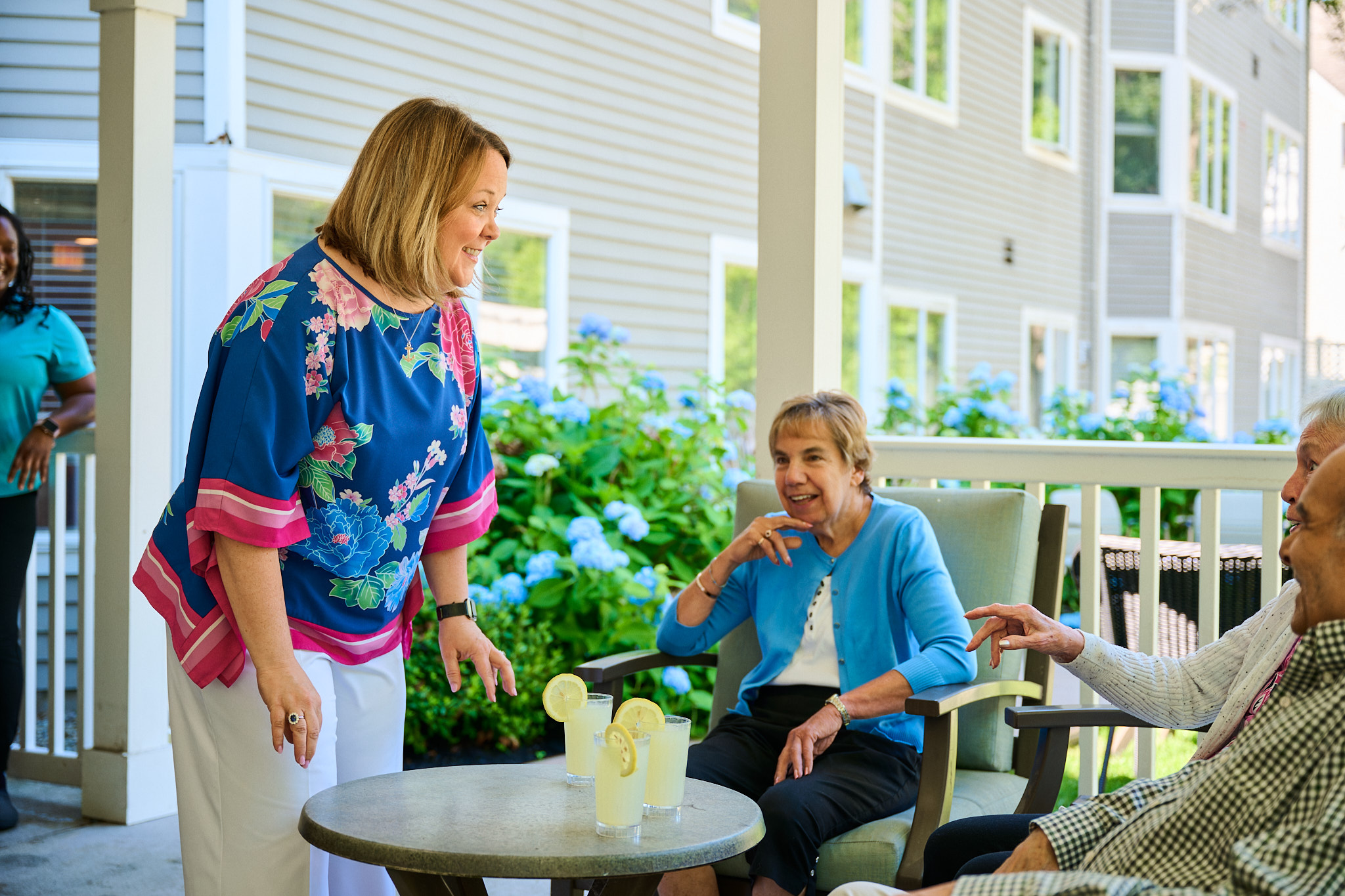
By Kara Miller, Mind and Memory Care Director at New Pond Village
Supporting a loved one with dementia can bring a wide range of emotions. When the disease advances, everyday moments that once felt familiar can become more complex. Conversation may become more difficult and routine activities can present new safety concerns. Yet the person we love and learned from is still there.
As caregivers, our role is to understand the disease, adapt to the changes it brings and, above all, approach each stage with patience, compassion and respect.
Dementia Caregiving Advice From a Memory Care Professional
As the Mind and Memory Care Director of New Pond Village, I work with older adults with dementia every day. I’ve also had the privilege of leading a team of caregivers who find great purpose in their calling and genuinely enjoy their work. The prevailing piece of advice that I give to both my team and family members is that there is no one playbook that applies to all residents—if you’ve met one person with dementia, you’ve met one.
This can be overwhelming advice to a loved one who is seeking guidance on how to handle an unforgiving disease. But it can also be very liberating because it helps a caregiver reframe their relationship and create their own manual for navigating dementia—one that will continue to change.
What Are Common Dementia Symptoms and Emotional Changes?
As someone develops dementia, their cognitive abilities decline and their short-term memory fades. This often leads to the common symptoms of paranoia, frustration and confusion. For many, however, their long-term memory is still intact and they are still processing emotions.
Residents often find pure joy in the simple things that busy adults often overlook—seeing the snowfall or leaves change color or visiting with children and animals. Some may call these reactions childlike. Instead, they’re clues into what characteristics are still strong in a person with dementia. What made them happy before dementia likely still does. Similarly, the simple irritations that bothered them earlier in life will probably still annoy them now. These are the first clues in how to effectively communicate.
Why Person-Centered Dementia Care Starts With Knowing the Individual
The key in working with someone who has dementia is understanding and remembering who they are behind the veil of the disease. When a new resident comes to New Pond Village, my team talks with family members to understand as much as we can about that individual. What are their fears, likes, preferences, favorite pastimes? If mom has a nickname, we continue to use that phrase to build trust and a sense of safety.
Conversely, if she hated the phrase “honey,” she’s not going to respond well to it now. If dad has always preferred blue polo shirts, it will be a familiar comfort to have plenty in the closet. But the day can get off to a bad start if he’s never liked plaid and that’s what is laid out for him. We strive to keep it simple, getting back to the basics of each individual and building our rapport off of that.

How To Communicate With Someone Who Has Dementia?
Of course, this disease is unpredictable, and it changes people—both the person who suffers from it and those who care for them. So let go of expectations. What worked last week may not work today.
While adults with dementia may have a hard time expressing themselves in conversation, they still give both verbal and nonverbal cues. Picking up on those—whether a facial reaction, a grunt or a giggle—can help caregivers map their communication. Responding to a positive reaction will lead to another, while a negative cue means it’s time to adjust the approach.
The important thing is to remain patient and flexible to respond in a way that shows compassion.
Self-Care for Dementia Caregivers: Give Yourself Grace
Every individual in the world is different. Dementia doesn’t make them the same. As a caregiver, give yourself the grace to take a break, get back to the basics and find the approach that works for you and your loved one.

Kara Miller is the Mind and Memory Care Director at New Pond Village. She is a Certified Alzheimer’s Disease and Dementia Care Trainer, a Certified Dementia Care Manager and a Certified Dementia Practitioner through the National Council of Certified Dementia Practitioners.